A logo does not look the same when it is stitched into fabric, transferred in full colour or engraved into metal. For personalised corporate gifts in Malaysia, the right customisation method depends first on the gift material, then on the artwork, quantity and finish you want people to notice.
Choosing the method early prevents avoidable compromises later. A detailed gradient may lose its character in embroidery, for example, while a simple one-colour mark may not need a full-colour printing process. The comparison below explains what each method does well and where its limitations begin.
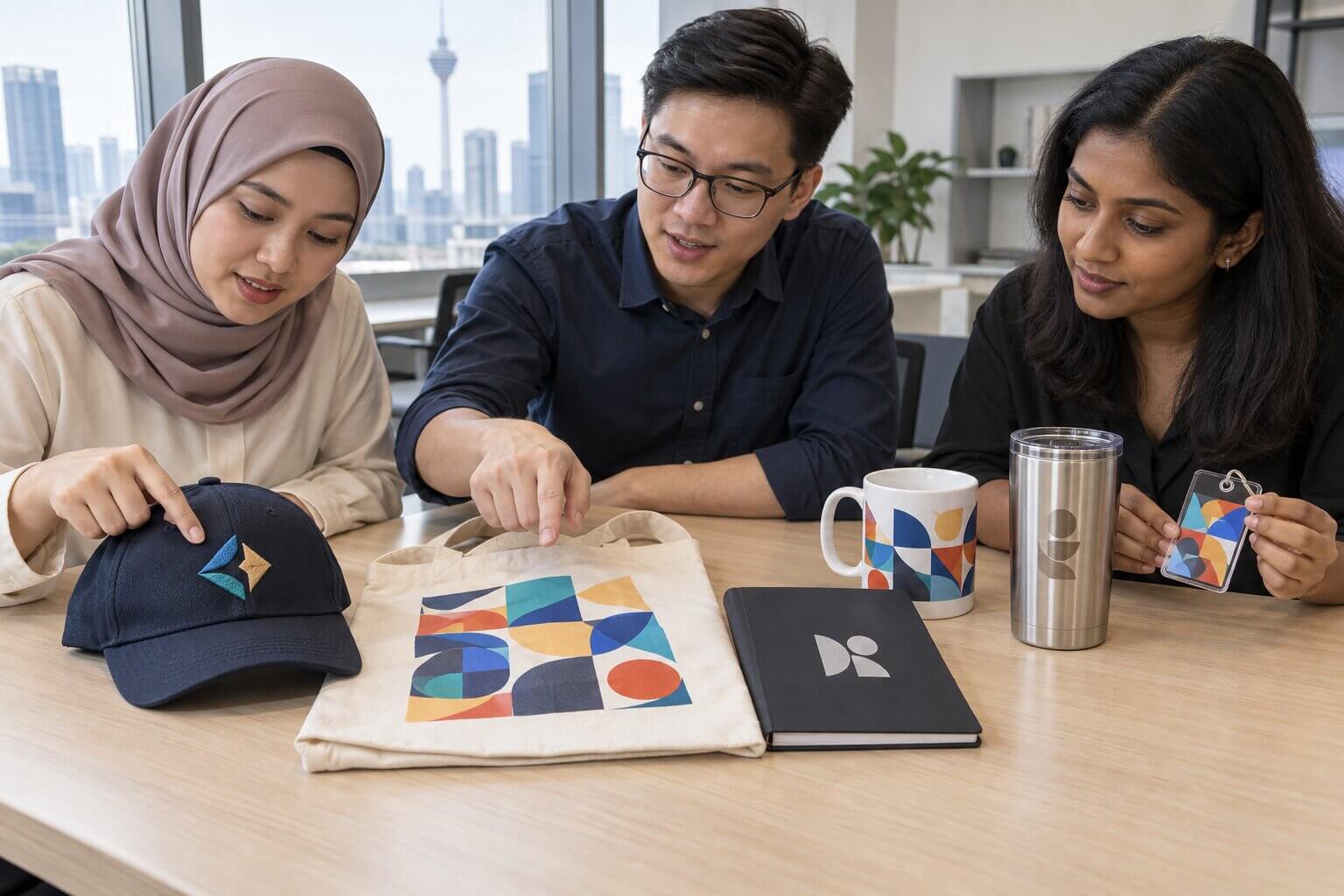
Six Customisation Methods at a Glance
This table is a starting point, not a substitute for testing the actual product. The same artwork can behave differently on a cotton tote, coated mug, powder-coated bottle or acrylic plaque.
| Method | Best suited to | Typical visual result | Most useful when | Main limitation |
| Embroidery | Caps, apparel, towels and fabric bags | Raised thread with visible texture | The logo is simple and a tactile, polished finish matters | Fine details, gradients and very small text may need simplification |
| DTF printing | Fabric bags, apparel and other suitable textiles | Detailed, full-colour print sitting on the fabric | The artwork contains multiple colours, small details or short-to-medium runs | The transferred area has a different hand-feel from the surrounding fabric |
| Silkscreen printing | Tote bags, notebooks, drinkware and other printable surfaces | Solid, clean colour areas | The design uses few colours and must be repeated across a larger order | Each colour generally requires separate setup, making complex artwork less efficient |
| Sublimation printing | Polyester textiles and specially coated items | Smooth, vivid image integrated into the surface | The design needs full colour, gradients or edge-to-edge coverage on a compatible item | It only works properly on suitable materials or coatings |
| Laser engraving | Metal, wood, glass, acrylic and some leather items | Precise, understated mark that reveals or alters the base material | Permanence and a restrained corporate finish matter more than printed colour | It does not reproduce brand colours like ink-based printing |
| UV printing | Acrylic, glass, wood, metal and other suitable hard surfaces | Sharp, direct full-colour print | A hard item needs detailed graphics or several colours | Adhesion and wear can vary by surface, so a physical sample matters |
The fastest way to narrow the choice is to divide the gifts into two groups: fabric items and hard-surface items. From there, compare whether the artwork needs texture, solid colour, photographic detail or a permanent material mark.
For Fabric Gifts: Embroidery or DTF Printing?
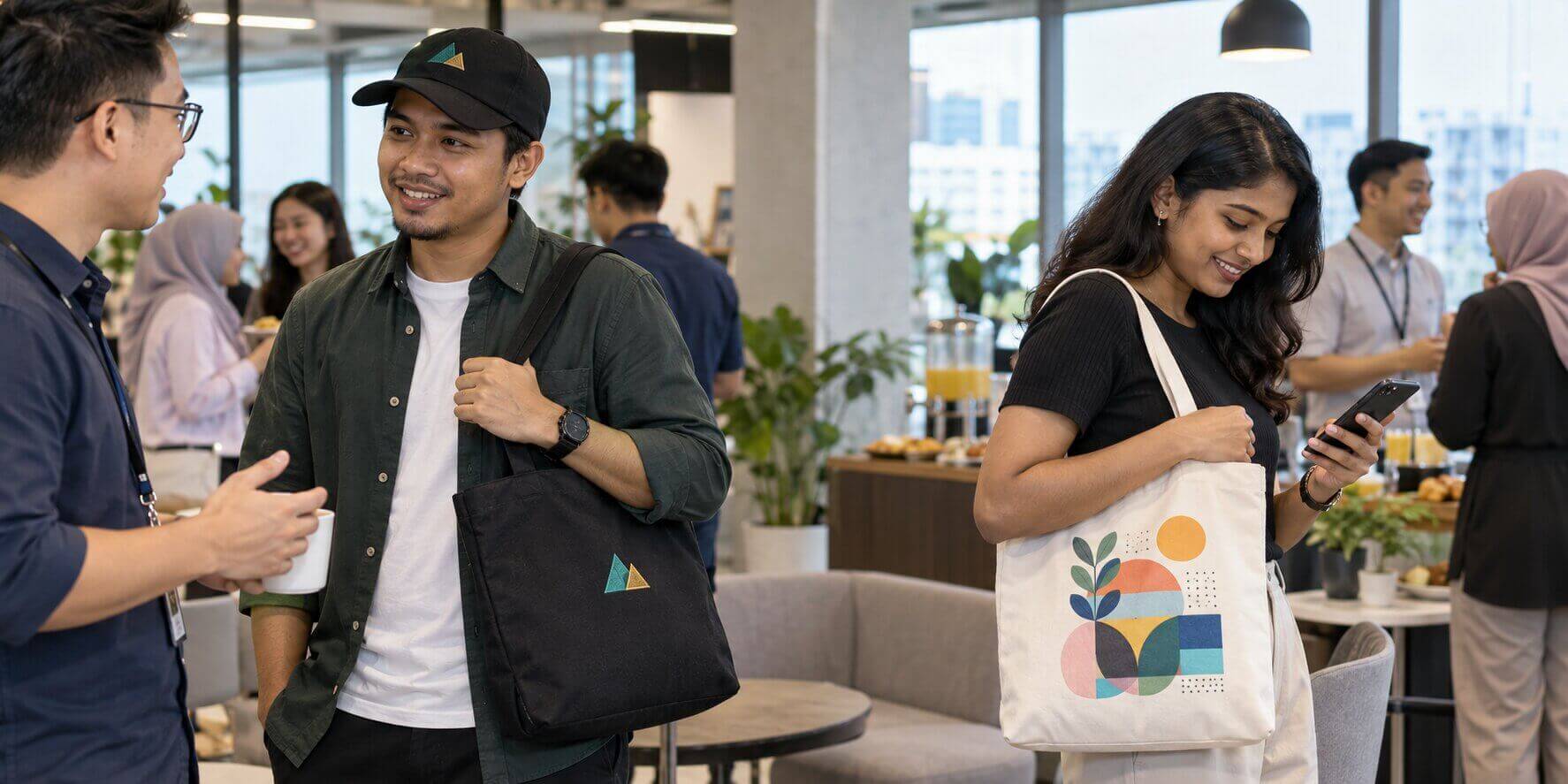
- Embroidery — when texture should feel intentional
Embroidery builds a logo with thread, so the branding becomes part of the fabric rather than a flat image placed on top. It is a natural fit for caps, polo shirts, towels and fabric bags when the design is bold enough to be translated into stitches.
Its strength is not colour accuracy or tiny detail; it is physical presence. A compact wordmark or emblem can look polished because the recipient can see and feel the construction. That same texture becomes a limitation when the artwork contains thin lines, small lettering, soft shadows or complex gradients. The design may need to be simplified and converted into a stitch file before production.
Embroidery also involves setup work, so it makes more sense when the final look justifies that preparation. Ask to see the proposed size and stitch direction on the actual fabric. A logo that works well on a firm cap panel may behave differently on a soft towel or lightweight tote.
- DTF printing — when the artwork needs more colour and detail
Direct-to-film printing first creates the design on a film, then transfers it onto the fabric with heat. It can retain details and multiple colours that would be difficult to reproduce with thread, making it useful for illustrated campaign artwork, event graphics and logos with several colour areas.
Because the design is transferred, the printed section has its own feel. A small chest logo may be unobtrusive, while a large solid graphic can feel noticeably different from the surrounding textile. Placement and print area therefore matter as much as the artwork itself.
DTF is particularly practical when a fabric gift needs full-colour branding without the screen setup associated with each individual colour. For repeat programmes, test how the sample handles normal folding, stretching and cleaning before approving the full run.
For Solid Colour or Full Coverage: Silkscreen or Sublimation?
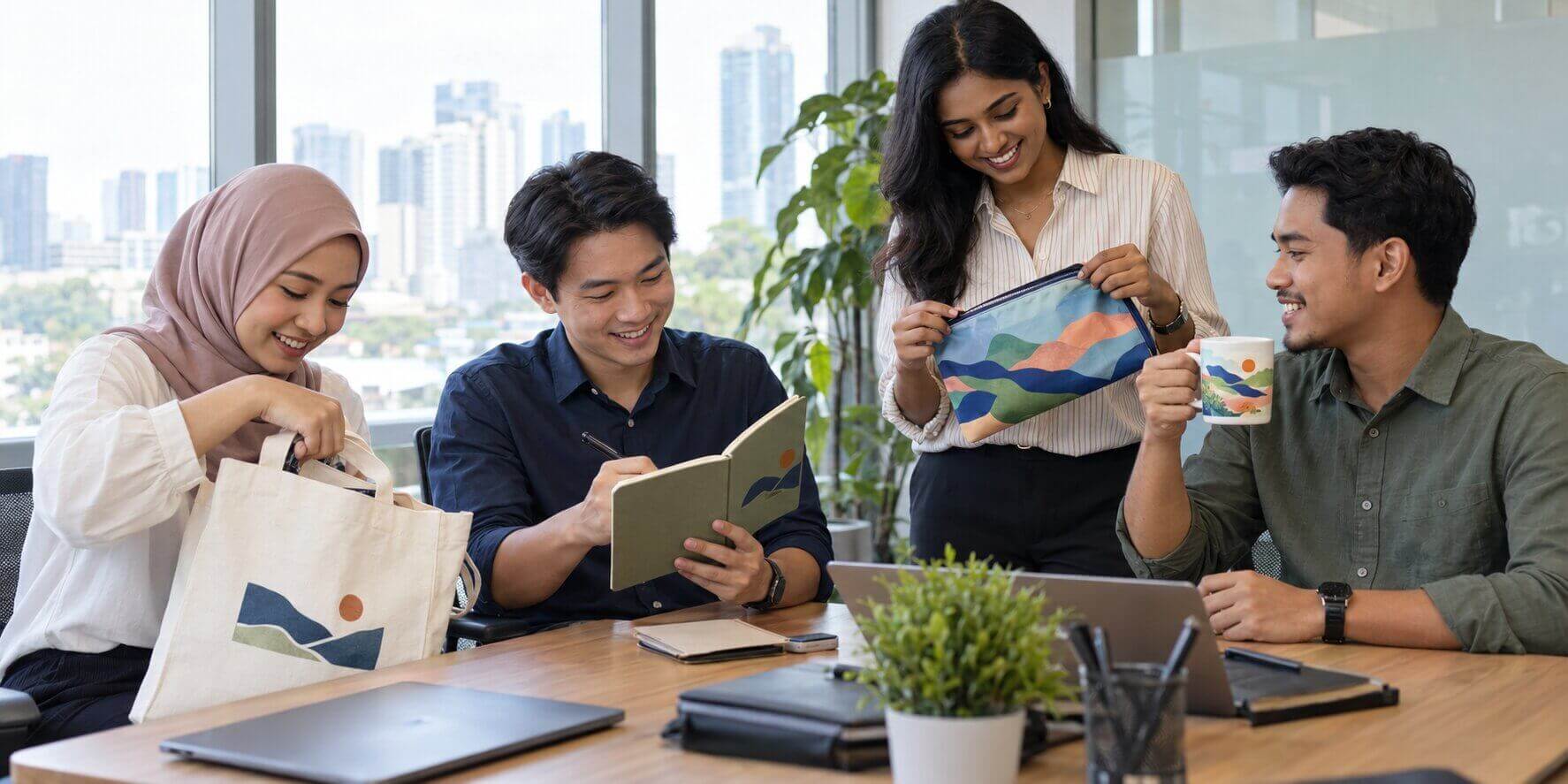
- Silkscreen printing — when the design is simple and the order is large
Silkscreen printing pushes ink through a prepared mesh screen. In practical buying terms, it is strongest when a design uses one or a few solid colours and needs to be reproduced consistently across many items.
A simple logo on tote bags, notebook covers or suitable drinkware can be economical at scale because the setup is spread across the order. Add more colours, however, and the process becomes more involved because each colour normally needs its own screen and alignment. Photographs, soft gradients and highly detailed illustrations are therefore not its natural territory.
Before selecting silkscreen, count the actual print colours rather than the colours shown on a monitor. Ask whether small reversed text, fine lines and close registration between colours will remain clear at the proposed print size. The method is effective when the artwork respects its strengths: bold shapes, controlled colour and repetition.
- Sublimation printing — when full colour should become part of the surface
Sublimation uses heat to turn dye into gas so it bonds with a compatible surface. On suitable polyester fabric or a specially coated item, the image does not sit as a thick layer on top. This produces a smooth finish that works well for gradients, photographic artwork and designs covering a larger area.
The crucial word is compatible. A design may be ideal for sublimation, but the chosen product may not be. Standard cotton fabric, untreated metal or an ordinary ceramic item cannot simply be assumed to accept the process. Product construction and coating must be confirmed before artwork is finalised.
Sublimation is worth considering for items such as polyester pouches, textile sleeves and coated mugs when full-colour continuity matters. Check colour on a physical sample because the base material, coating and heat process can affect how the final image appears compared with the screen preview.
For Hard Surfaces: Laser Engraving or UV Printing?
- Laser engraving — for a permanent, understated mark
Laser engraving removes or alters the surface of a material to form the design. Instead of adding ink, it works with the product itself. That makes it a strong option for metal tumblers, pens, wooden items, glass, acrylic and selected leather products when a quiet, durable finish is more appropriate than a colourful logo.
The result depends on the base material. Engraving a coated metal bottle may reveal the metal beneath, while wood can show natural variation in tone. This variation is part of the finish, not necessarily a defect, but it means an on-screen mock-up cannot fully represent the outcome.
Laser engraving suits logos with clean outlines, names and simple text. It is less suitable when exact brand colours are essential because the mark comes from the material response rather than coloured ink. A sample should confirm legibility, contrast and depth on the chosen item.
- UV printing — for detailed colour on hard items
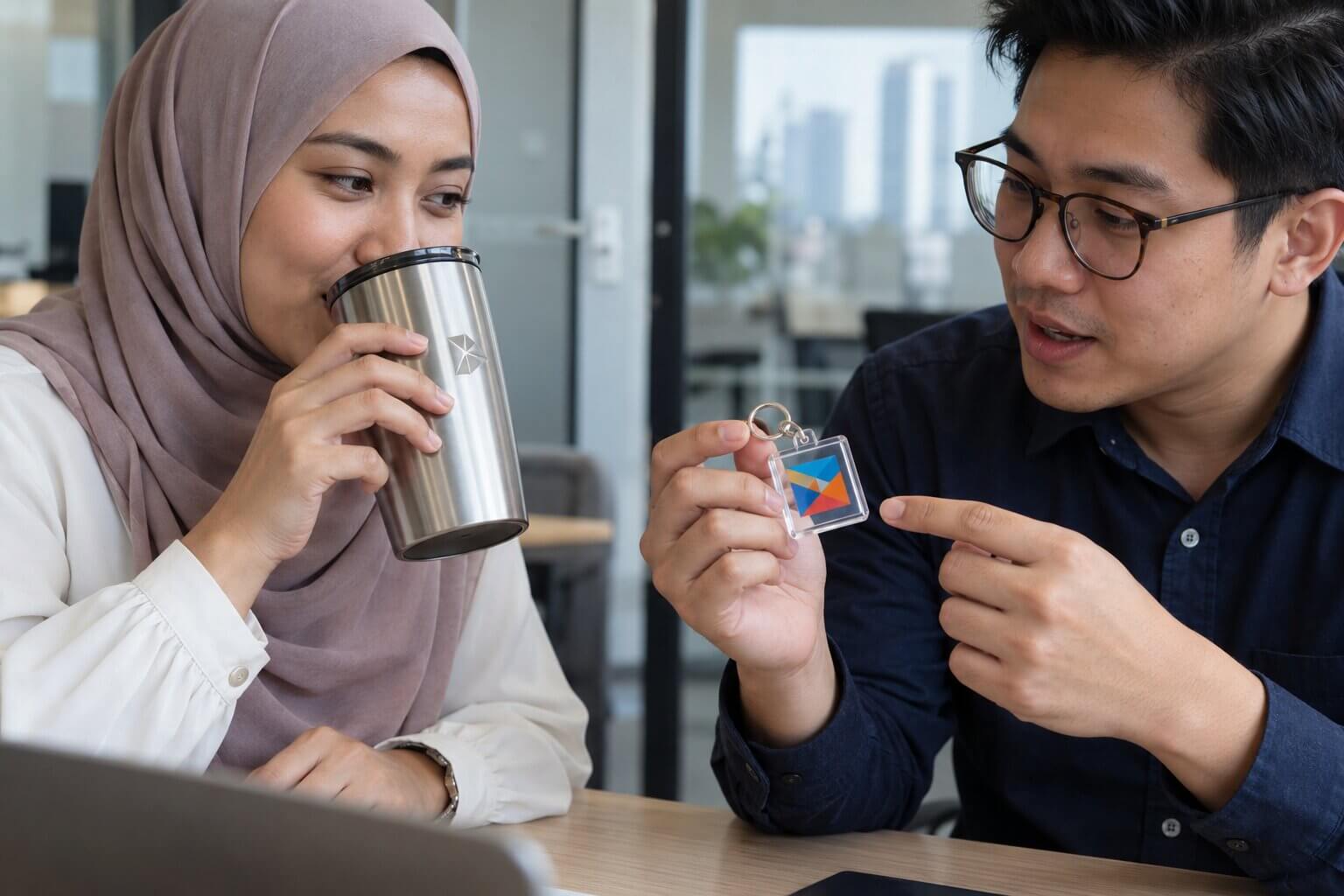
UV printing places ink directly on a surface and cures it with ultraviolet light. It can reproduce multiple colours and fine detail on suitable hard materials such as acrylic, glass, wood and metal, making it useful for items like keychains, coasters, plaques and selected drinkware.
Compared with engraving, UV printing gives the artwork more visual freedom. Logos can retain their colours, and illustrated designs can include smaller details. The trade-off is that the print remains a surface application. Adhesion, texture and resistance to regular handling depend on the item, coating and use conditions.
Do not approve a UV-printed gift from a digital mock-up alone. Inspect a physical sample for colour, edge sharpness and how the printed area responds to fingernails, friction and cleaning appropriate to the product.
Choose the Method Before Approving the Artwork
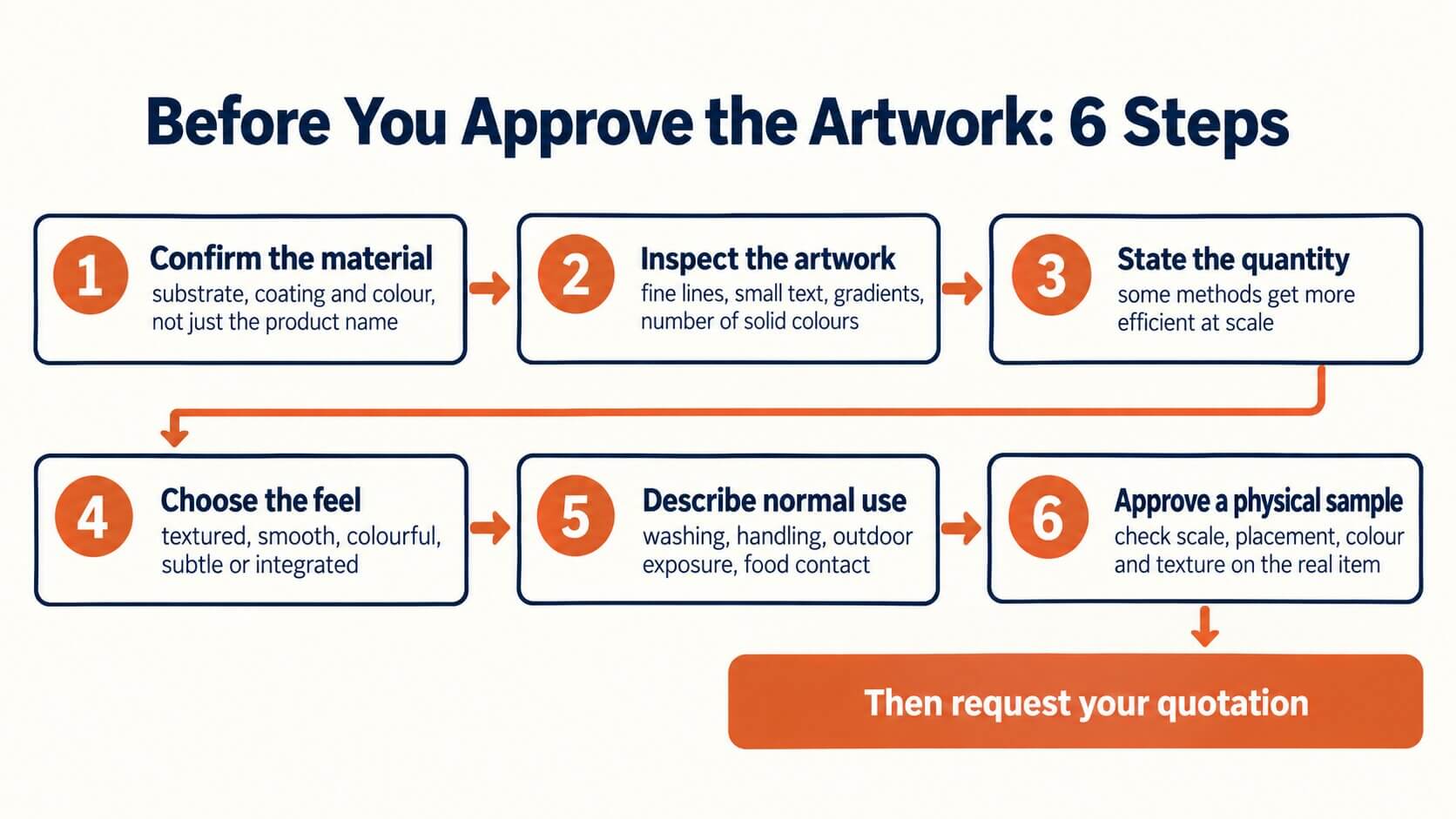
The customisation method should be part of the brief, not a production detail decided after the gift has been chosen. Use this order when preparing a quotation request:
- Confirm the material. Record the actual substrate, coating and colour—not only the product name.
- Inspect the artwork. Note fine lines, small text, gradients, photographs and the number of solid colours.
- State the quantity. Setup-heavy methods can become more efficient across larger runs, while other methods suit smaller batches more comfortably.
- Choose the intended feel. Decide whether the branding should be textured, smooth, colourful, subtle or integrated into the material.
- Describe normal use. Washing, repeated handling, outdoor exposure and contact with food or drink can change what needs to be tested.
- Approve a physical sample. Check scale, placement, colour, texture and legibility on the real item before mass production.
Provide an editable vector logo wherever possible. Adobe explains that vector artwork can be resized without losing quality, which gives the production team more flexibility when adapting a mark to different print areas. Keep brand colour references, minimum logo size and clear-space rules in the same artwork pack.
There is no single best customisation method. Embroidery and engraving provide texture or permanence; DTF, sublimation and UV printing carry more colour and detail; silkscreen works best when simple artwork is repeated at scale. What matters is matching the method to the material—and protecting the part of the design that carries the most meaning.
That decision becomes easier when one supplier can coordinate different customisation methods instead of forcing the same finish onto every product. The material, artwork and intended result can be reviewed together, with a sample approved before production begins.
Already have a gift in mind? Share the product material, artwork, quantity and required date to narrow down the suitable method before requesting a sample.