
A lunch box can feel like a considered Christmas present when it reflects a habit the recipient already enjoys. If you are choosing corporate lunch box gifts in Malaysia, start with the person who will open it: someone who regularly brings meals from home has a clear reason to appreciate one.
The gift still needs to feel like a thank-you. Its appeal comes from making a familiar part of the day more convenient, with a Christmas message that recognises the person or working relationship behind it.
Once that fit is clear, the useful questions become specific. Will the layout suit their meals? Can they carry it comfortably? Are its use and care instructions compatible with their routine?
Who Would Appreciate a Lunch Box at Christmas?
For employee gifting, look at the habits already visible in your team. Colleagues who bring packed meals, prepare food for several days or enjoy sharing home-cooked dishes have an obvious use for a lunch box. It can be a thoughtful way to acknowledge something you know about them at the end of the year.
A lunch box can also suit a client or business partner you know well enough to understand their routine. An account manager may know that a regular contact brings lunch to the office or enjoys cooking. That knowledge gives the gift a personal reason beyond the company logo.
For a broad client list with little information about individual preferences, the fit is harder to establish. Being an office worker alone does not tell you whether someone carries food. Check with the relationship owner before choosing the same item for every contact.
The accompanying message matters too. Present it as appreciation for the year’s work or partnership. Comments about saving money, dieting or needing healthier lunches can introduce an expectation the recipient never asked for.
If recipients have different routines, a lunch box can be one option within a comparable gift selection. Give people a genuine choice while keeping the overall level of appreciation consistent.
Choose the Layout Around a Real Meal
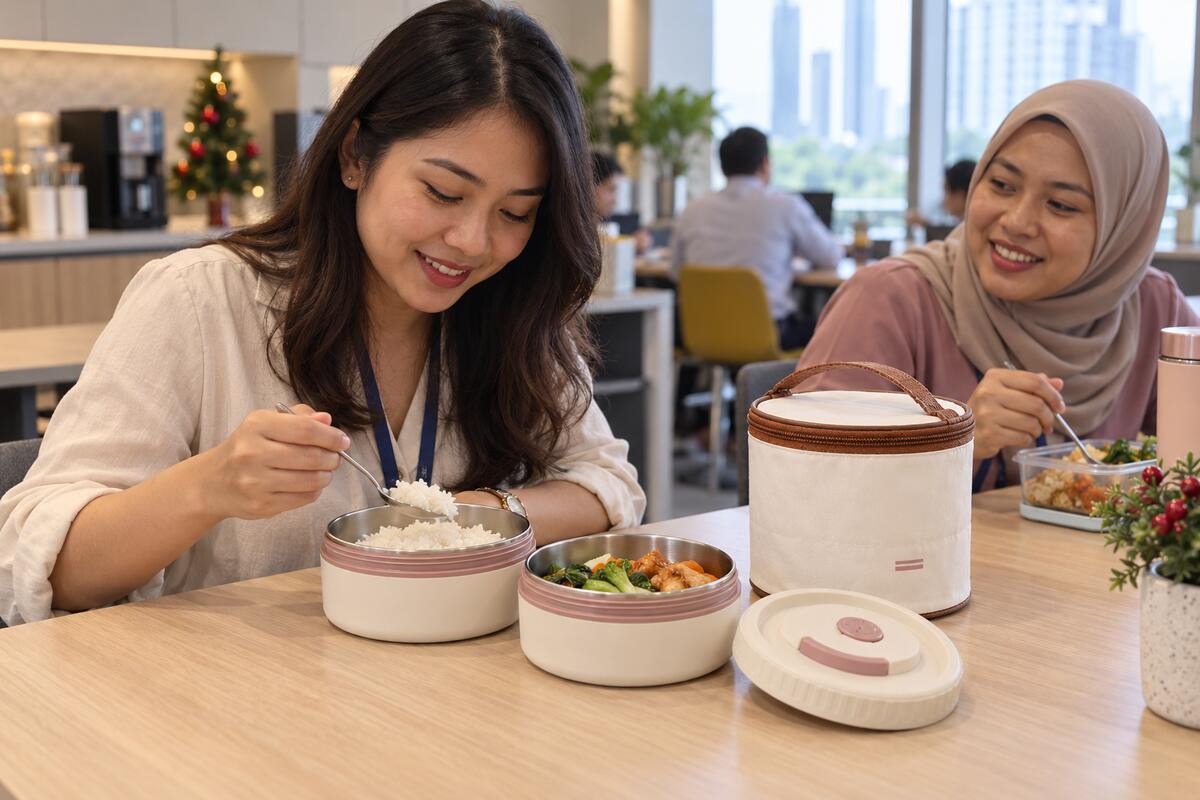
Think about what the recipient would actually pack. Rice with vegetables and a side dish needs a different arrangement from sandwiches or noodles. For someone who likes to keep rice and lauk apart, separate containers may be more useful than one large space.
A two-tier lunch box is worth considering for that preference. Look at how each tier can be filled, opened and placed on the table. The arrangement should make the meal easy to carry and eat, without requiring the recipient to empty everything onto another plate.
Separation and sealing are different questions. A divider may keep solid foods apart while allowing sauce to move between sections. Separate tiers also need their own closure assessment if the person regularly carries curry, gravy or sambal. Confirm suitability for the intended food rather than judging it from the product photograph.
Consider the complete meal when assessing size. The box needs enough room for the recipient’s usual portions, but it also needs to fit the bag they carry. A taller stacked design may occupy a different space from a flatter container, even when both hold a similar amount.
Using a physical sample to picture an ordinary packed lunch is more revealing than comparing capacity figures alone. Open both tiers, place them as they would sit during a meal and see whether the layout feels convenient.
Match the Material to Reheating and Cleaning Habits
The material description is a starting point, not a complete set of instructions. A lunch box combining stainless steel and PP plastic may have different requirements for its body, lid and other components. Ask for use and care guidance for the exact model you are considering.
Reheating needs a clear answer
If recipients use an office microwave, establish whether the selected box supports that routine. Confirm which parts, if any, are suitable for microwave use and what must be removed. A plastic outer body does not establish that the assembled product is microwave-safe.
The Singapore Food Agency’s guidance on plastic food containers advises using only containers labelled microwave-safe for microwave cooking or reheating, and following the manufacturer’s instructions. Apply that distinction when evaluating a gift instead of treating a material name as permission to reheat it.
If the selected model requires food to be transferred to another vessel, consider whether that extra step would suit the recipient. Reheating convenience can be a deciding factor for someone whose lunch break depends on the office microwave.
Cleaning should be manageable after every use
Examine the corners, lid edges and any seals or removable parts. Ask how they should be cleaned and dried, and whether dishwasher use is permitted. Small recesses that are difficult to reach may become frustrating for someone washing the box in a shared pantry.
Make sure the recipient receives the relevant care instructions with the Christmas gift. They should be able to identify the permitted uses without having to find the product listing or ask the person who placed the order.
Add a Carrier When It Solves a Real Problem
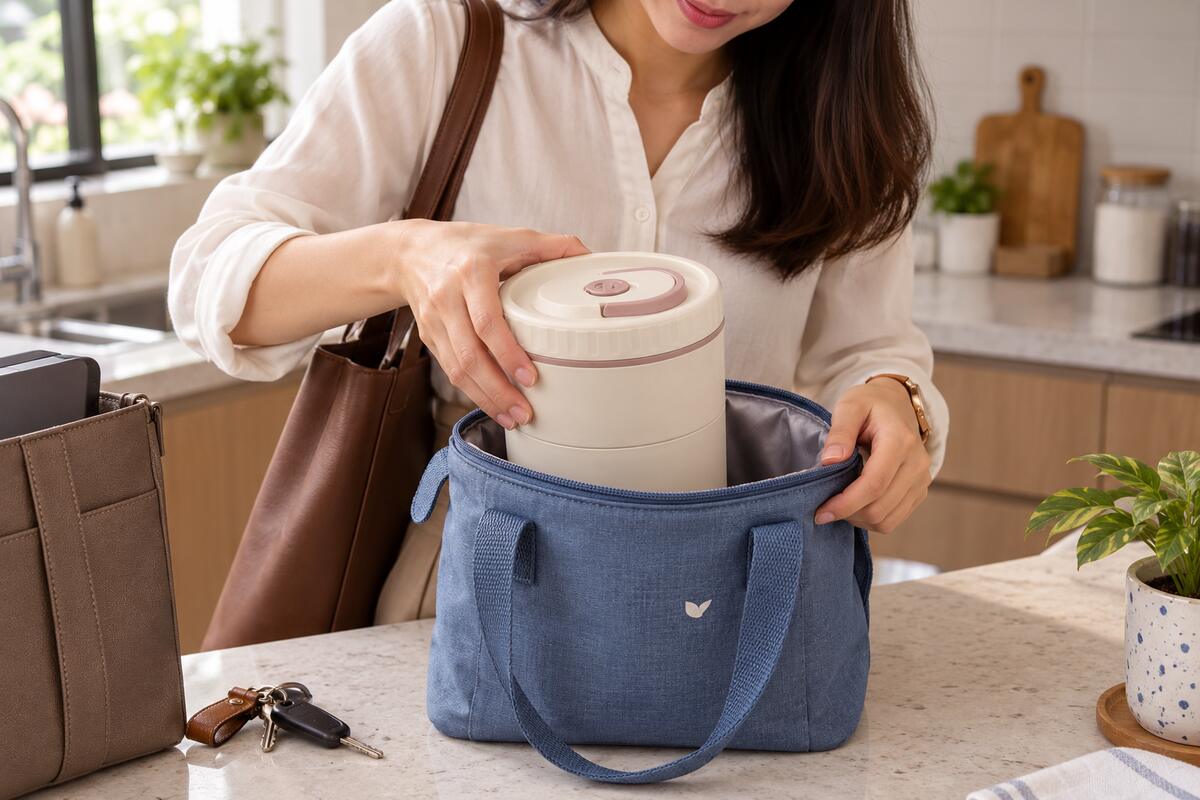
A lunch box can be a complete gift on its own. An additional carrier earns its place when it makes the recipient’s journey easier, such as keeping the box upright and separate from work documents during the commute.
If you are considering a cooler bag, assess it with the actual lunch box inside. The opening needs to be wide enough to insert and remove the assembled box comfortably. Check the base, the space above the lid and how the handles feel when the bag is loaded.
This also helps you judge whether the combination is useful for the intended recipient. Someone who already has a suitable lunch carrier may prefer the box alone. Someone who currently carries food separately from a work bag may welcome a dedicated option.
Keep any temperature-retention claims separate from the carrying benefit. Confirm the bag’s stated use and care requirements rather than promising that it will keep every meal hot or cold for a particular period.
Make the Christmas Thank-You Personal
A familiar household item becomes a more considered present when the recipient understands why you chose it. At Christmas, the message can connect that everyday usefulness with appreciation for the year you have shared.
For employees, a short note from a manager or team can make the gift feel more personal than a standard collection notice. For a client or partner, a signed card from the person who works with them keeps the gesture connected to the relationship.
The wording can stay simple: “Thank you for being part of our year. Wishing you a restful Christmas and many good lunch breaks ahead.” Adapt the greeting to the recipient and occasion, especially where the wider campaign also includes year-end appreciation gifts.
Keep product branding proportionate to that purpose. A discreet mark can identify the giver without dominating the item. Individual names may be useful where similar boxes share a pantry, provided that level of personalisation suits the recipients.
During an office Christmas gathering or a client visit, leave room for the actual thank-you. A brief personal handover gives the gift context that its practical design cannot communicate by itself.

A useful Christmas gift has a place in the recipient’s life after the holiday. For a lunch box, that place should be easy to picture: a familiar meal, a manageable journey and a lunch break it genuinely suits.
Before choosing it for your recipients, arrange a lunch box sample review with Memoire Gift. Bring the bag it needs to fit and use the review to assess the layout, closure and handling, with the product’s use and care instructions available to guide the decision.