
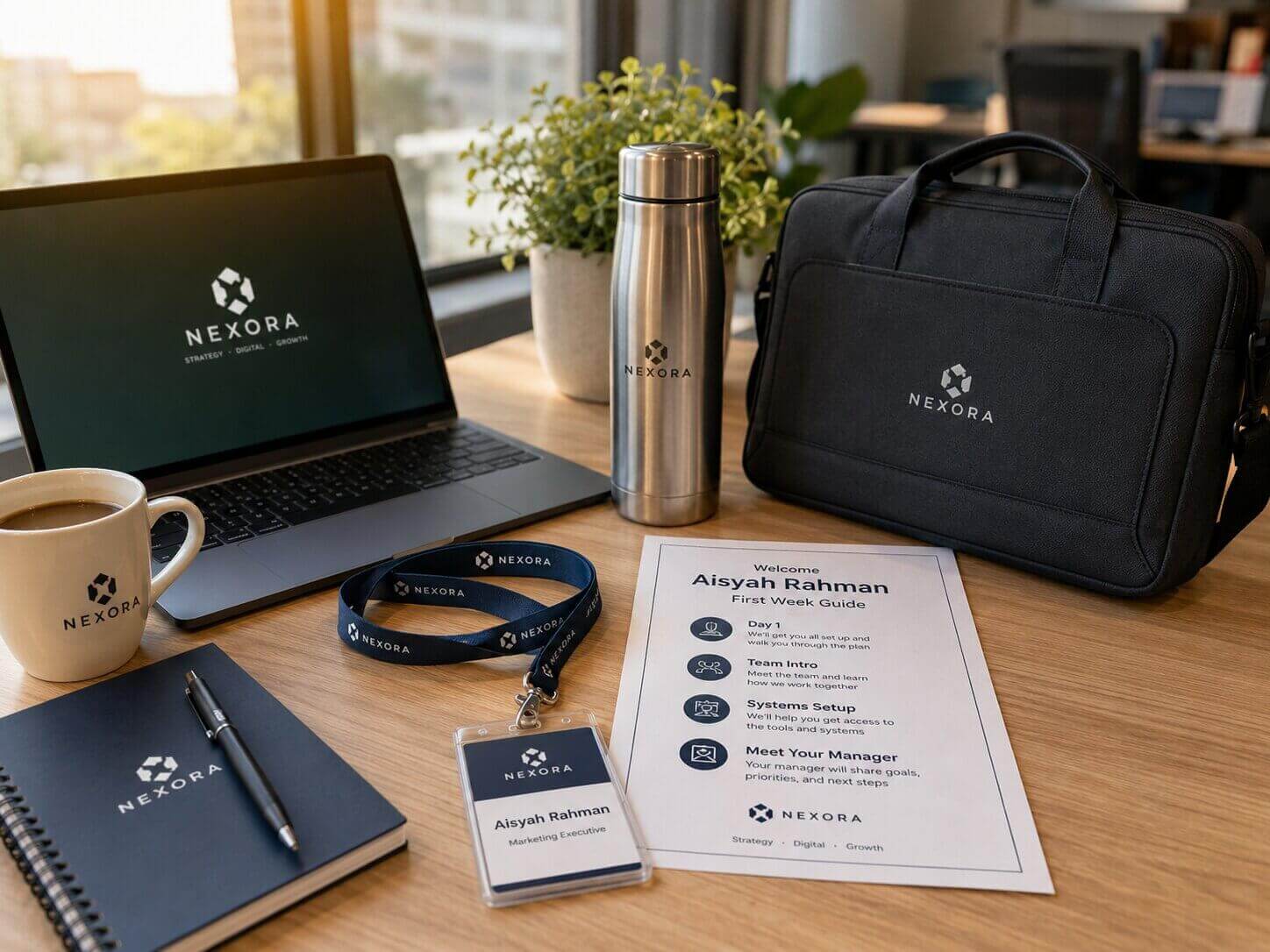
It is a new hire’s first morning. They collect their staff pass, find their desk, and there it is — a kit with their name on it: a ready-to-wear ID lanyard, a laptop bag, a flask, and a one-page guide to their first week. Before a single task, they feel expected.
That feeling is the real job of a new hire welcome kit, and in Malaysia’s tight hiring market it is one of the cheapest ways to make day one land. So rather than list random swag, this guide is built around the four things a good kit actually has to do.
Get those four jobs right and the contents fall into place.
A Welcome Kit Is Onboarding You Can Hold
A welcome kit is not a gift bag. It is the physical half of onboarding — and onboarding is where most companies quietly lose people. Gallup found that only 12% of employees strongly agree their organisation does a great job of onboarding new hires, per its onboarding and retention research, which means the overwhelming majority walk in underwhelmed.
A thoughtful kit is a cheap, visible way to land on the right side of that gap. But it only works if each item earns its place — so judge the kit by what it does for the new hire, not by how full the box looks.
Here are the four jobs it needs to cover.
Job One: Make Them Feel Expected

The first thing a kit should say is “we were ready for you.” Nothing undercuts a first day faster than a scramble for a spare pass or a bare desk.
Have the essentials prepared and personalised in advance — a name-printed ID lanyard and card holder ready for their access card, and a flask or keepsake engraved with their name. Personalisation is the whole point here: it turns standard items into proof that someone prepared for this specific person.
For remote or hybrid joiners, this job means shipping the kit to arrive before day one — so a distributed start still feels planned rather than forgotten.
Job Two: Equip Them to Start Without Friction
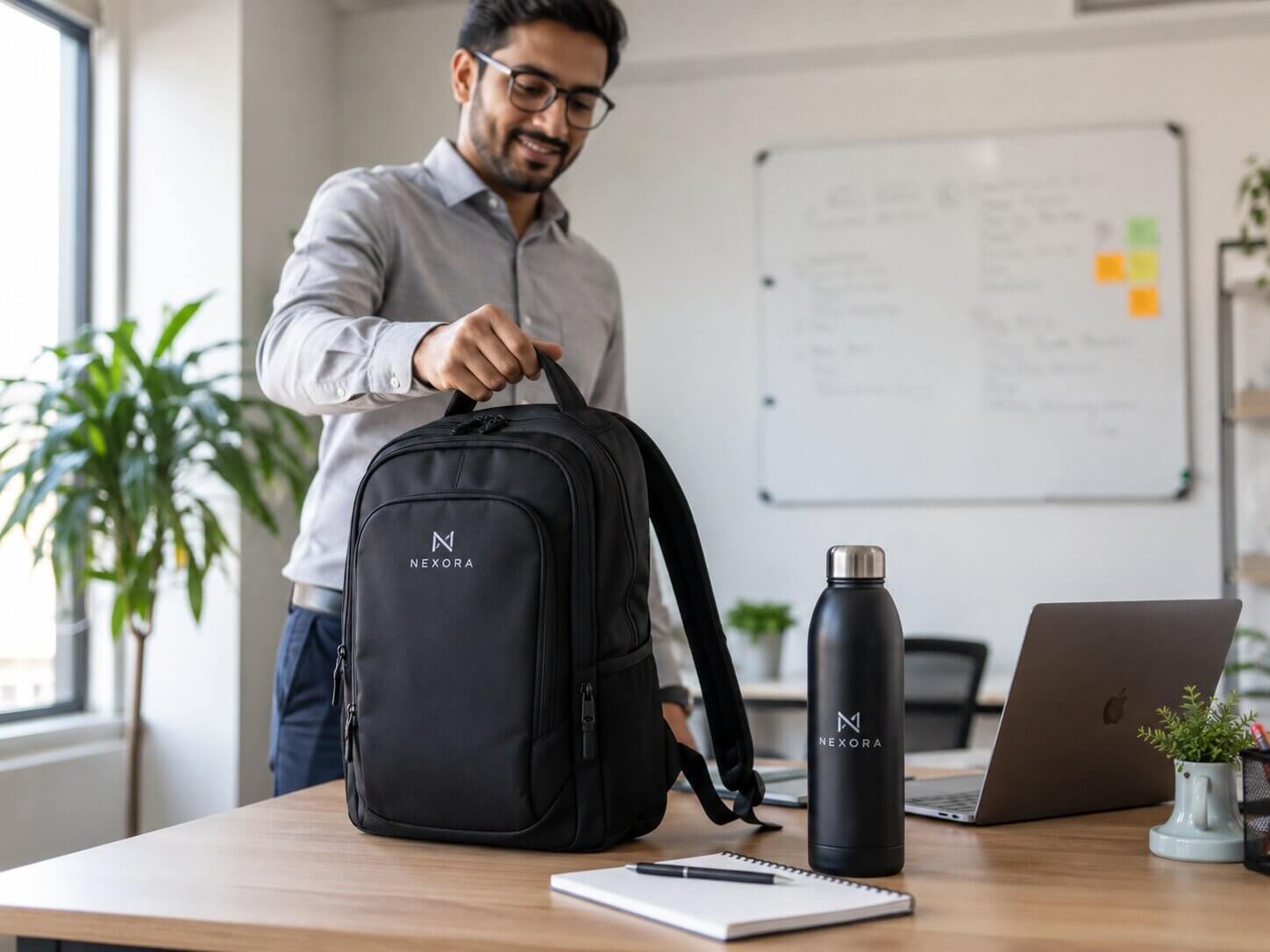
The second job is practical: remove the small snags that make a first week feel clumsy. Every item should solve a real, immediate need.
A laptop bag or backpack means they can carry their gear from day one instead of juggling it — and it is one of the few items that gets daily use for years. A quality insulated flask spares them the first-day hunt for a cup and quietly keeps your brand on their desk.
Keep this layer genuinely useful over impressive. The measure of a good welcome item is whether they reach for it in week two without thinking about it.
Job Three: Help Them Find Their Feet
This is the job most kits skip — and the one that separates a real welcome from a bag of merchandise. A new hire’s biggest day-one stress is not equipment; it is not knowing how things work or who to ask.
Include a printed one-pager that does the orienting for them: their first-week schedule, the handful of names and faces they will deal with most, where to get IT and HR help, and the small unwritten norms every workplace has. It costs almost nothing and removes the quiet anxiety that makes new joiners feel lost.
A kit that answers “how do I find my way here?” does more for retention than any premium item, because it makes someone feel capable on day one instead of adrift.
Job Four: Make Them Feel Part of the Team
The last job is belonging — and it is better handled by people than by products. Skip the generic printed welcome letter; it reads as a template and lands as one.
Instead, name a go-to buddy in the kit — a real colleague, with their contact, whose job is simply to answer the “silly” questions. Pair it with a genuine team gesture, like an invite to a first-week lunch. These cost little and do what no item can: they tell a new hire there are real people glad they are here.
Belonging is the difference between someone who has a job and someone who feels part of something — and it starts in the first few days or not at all.
Scale It Without Losing the Personal Touch
The four jobs hold whatever the size or seniority of the intake. For senior or executive hires, step the contents up to a premium curated set with a finer finish — the same four jobs, pitched to the level of the role. For a large graduate or seasonal cohort, standardise a strong core kit so every new joiner opens the same quality of welcome.
The trap to avoid is a bulk-bought box that feels bulk-bought. Even at scale, a printed name and a prepared, personal touch are what keep a kit from feeling like a handout.
Have It Waiting Before They Arrive
The best welcome kit is already on the desk when a new hire walks in — prepared, personalised, and clearly meant for them. It does in thirty seconds what an orientation deck cannot: it makes someone feel they made the right choice.
If your next intake is coming up, we can assemble and brand a kit that covers all four jobs — from a handful of senior hires to a full graduate cohort, personalised and ready before their first morning. Send us your intake details and we’ll build a welcome your new joiners actually keep.